
One week ago, we had our latest bookclub meetup. It’s been a while since we met because we’ve decided to slow down the tempo and read one book every other month instead of one per month. Hopefully, this will let people take their time and enjoy the books without feeling too stressed. The whole point of the club is to have fun, after all.
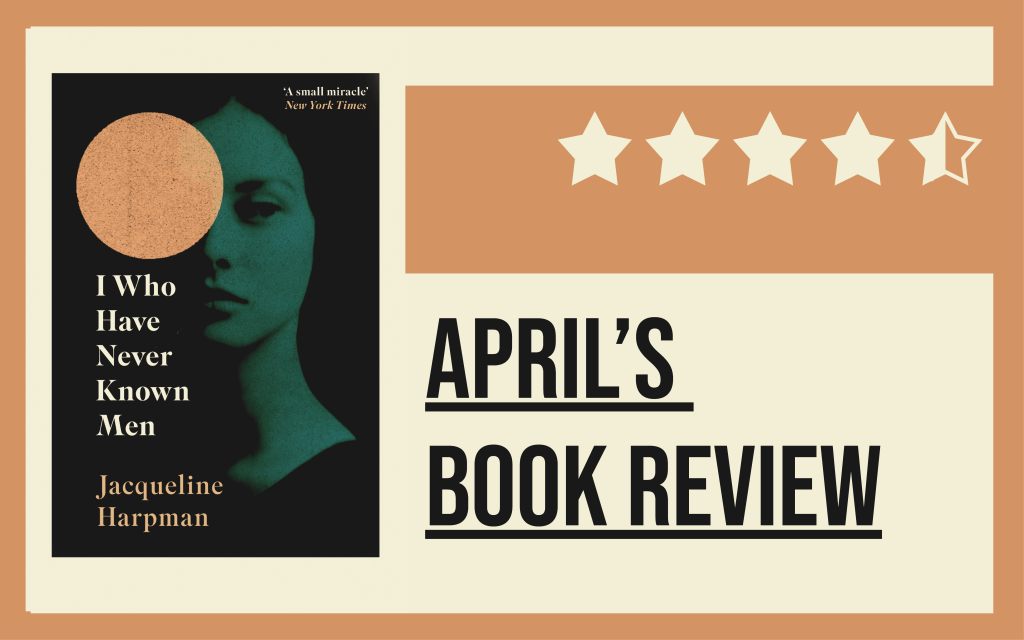
The book we’ve been reading is I Who Have Never Known Men by Jacqueline Harpman. It is a dystopian novel about a girl who has grown up in a cage together with 39 other women with no memories of a life outside of her jail. They have been constantly surveilled by guards for as long as she could remember. One day, an alarm goes off and the guards disappear, leaving the doors open and setting the women free. But are they really? Or have they just entered a bigger cage?
It’s interesting how one book can give such different impressions to different people. When I read this novel, I had this overhanging melancholic feeling throughout the whole story as this group of women navigated the dystopian wasteland. For others this wasn’t necessarily the case. As I spoke to another reader they said that they felt a much more wholesome feeling as they were reading. Evidently, we’d been focusing on two different things: I on the environment and some bigger, bleaker vision of the future, and they on the bonds between the main characters and the community and solidarity between these women.
Neither of us is wrong, and I always think that it’s nice when readers are allowed to have their own individual experiences instead of being force-fed what to feel and what to believe. The plot is quite vague, which I think could be both its strong and its weak point depending on what kind of reader you are. This is not a dystopian action story; I would call it a low intensity read that is very introspective and uses a lot of subtle storytelling through the environment.
The book raises a lot of questions that don’t necessarily get answered, neither for the readers nor the characters. The main character—known only as “the child”—is completely clueless about anything that happened before the cage, while the women at least have some memory of their lives before. It’s hard to even imagine what it would be like to grow up knowing only a room, but I thought the character was very well-written, and her behaviour and motivations felt believable and well thought out.
Since the plot of this book is quite vague I had a hard time picking out how I should classify this story and its message. It’s a feminist story about a group of women working together and navigating their independence. It’s also an existential story about what it means to live free and not just survive. It’s a science-fiction story, with strange environments and big mysteries. And lastly it’s a coming-of-age story about a girl growing up in a foreign place, trying to understand herself and come to terms with her identity.
The only frustrating part of this book for me was the lack of answers, even though I know that was part of the point of the story. I would have preferred to get at least a little more payoff after going through the entire book, but at the same time I’m aware that no answer could measure up to the myriad of theories in my head.
I would give this book 4.5/5 stars, only because I’m very scared of giving books a full five stars. I enjoyed it; it was incredibly well-written and just the right amount of pages that I felt the story needed and deserved.
Next up in the bookclub is The Thursday Murder Club by Richard Osman, so tune in for a coming review!
By Elvira Svensson
